One unit decides forty per cent of your AAT Level 3 grade, and it is not the one most students start with. The Q2022 Level 3 Diploma in Accounting weights its four assessments unevenly, so the order you sit them in changes what a Merit or Distinction actually costs you in study hours.
Four units, no synoptic — and that is the Level 2 difference
The Level 3 Diploma in Accounting (qualification number 603/6337/X) applies to students registered with AAT from 1 September 2022. It runs four units: Business Awareness (BUAW), Financial Accounting: Preparing Financial Statements (FAPS), Management Accounting Techniques (MATS) and Tax Processes for Businesses (TPFB).
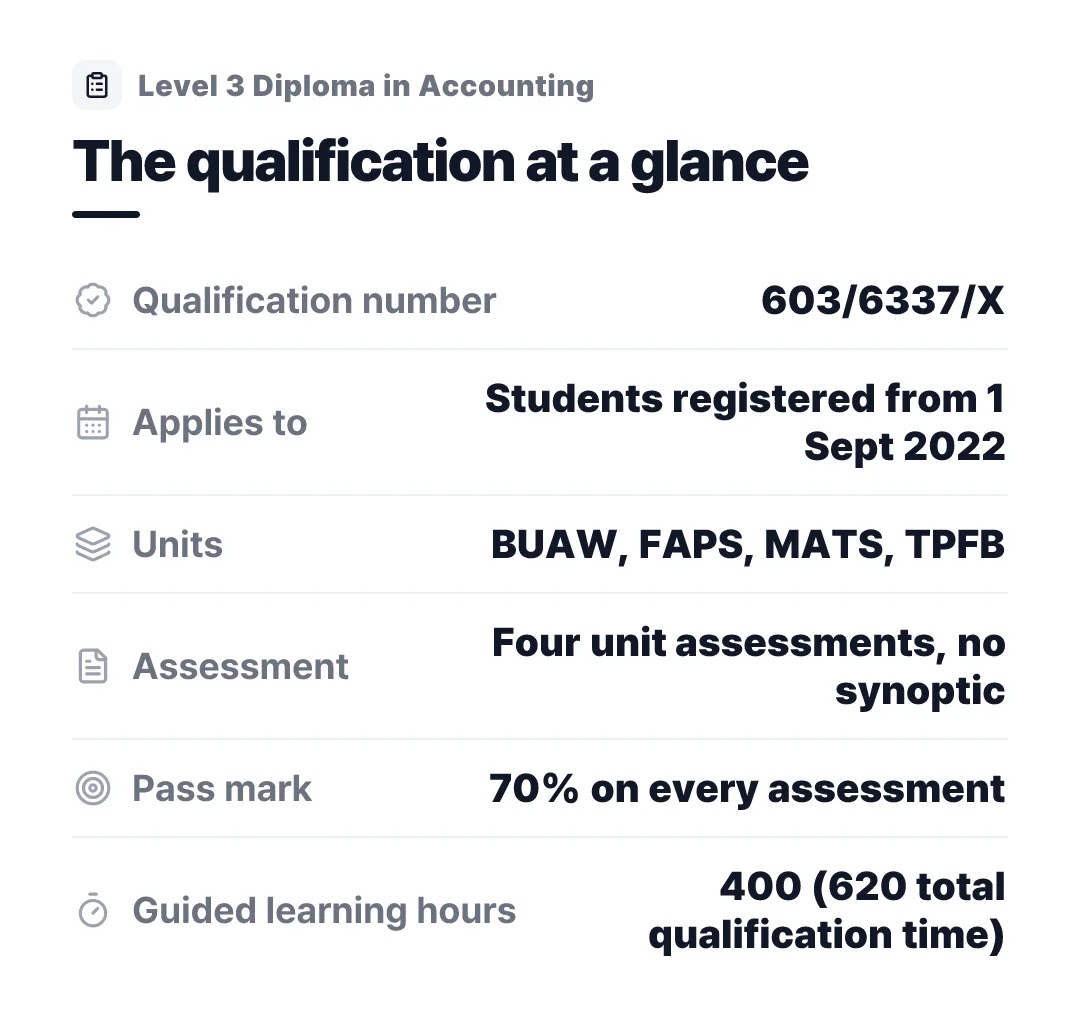
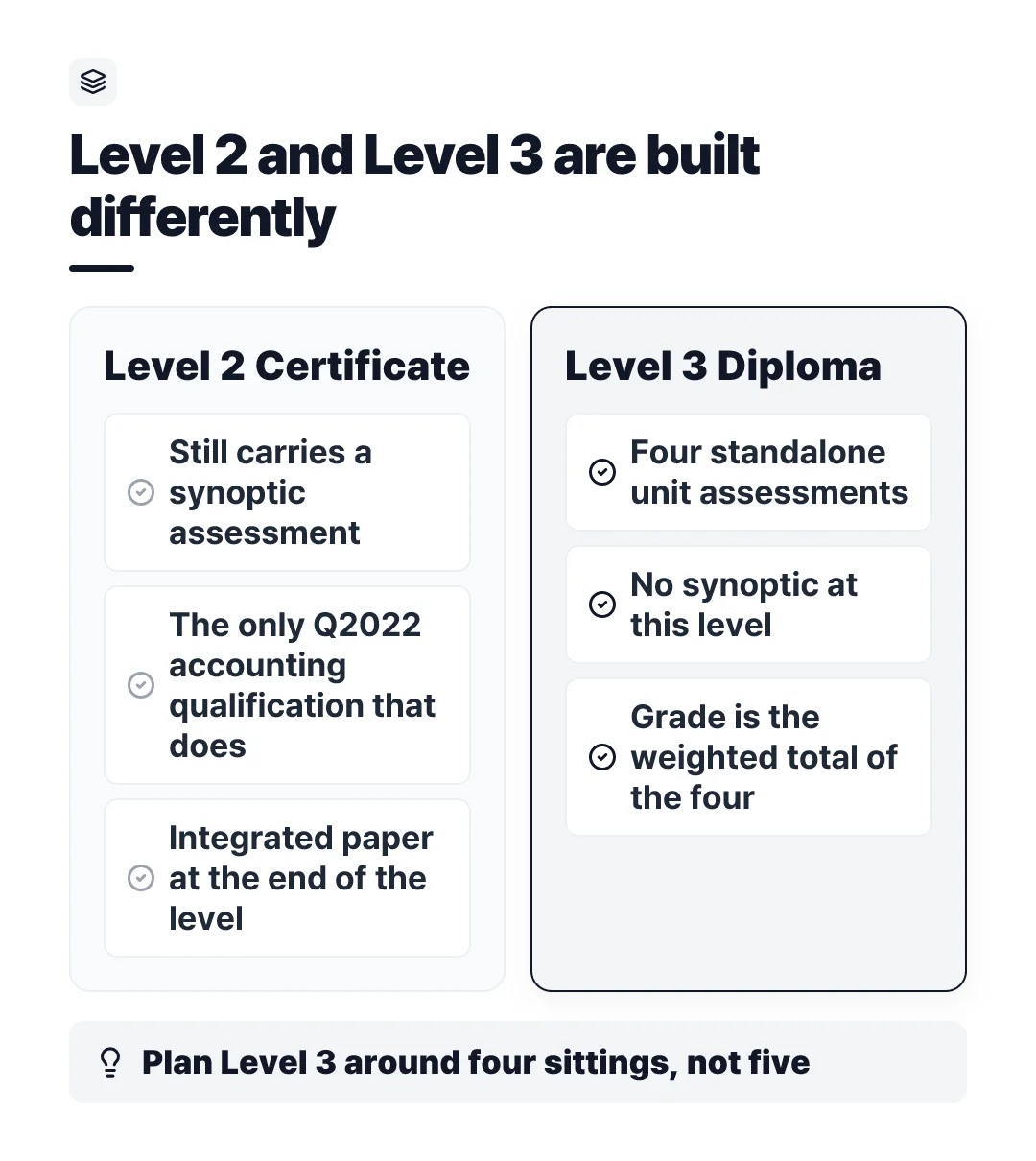
Each is assessed by its own computer based assessment. There is no synoptic at this level. That catches people out, because under Q2022 the only accounting qualification that still carries a synoptic is the Level 2 Certificate in Accounting. If you came up through Level 2 and are bracing for a second integrated paper at the end of Level 3, there isn't one — four unit assessments and you are done.
The pass mark is 70% on every assessment, which is high by the standards of most Level 3 qualifications and is the reason AAT describes a bare Pass as already demonstrating a high level of competence. Miss 70% on any single unit and the qualification is unclassified regardless of how the other three went.
The units do not carry equal weight
AAT publishes both a guided learning hours value and a percentage contribution to the overall grade for each unit. Setting them side by side shows how lopsided the qualification is, and dividing one by the other gives you something more useful than either on its own.

| Unit | GLH | Contribution to grade | GLH per grade point |
|---|---|---|---|
| Business Awareness (BUAW) | 70 | 15% | 4.7 |
| Financial Accounting: Preparing Financial Statements (FAPS) | 150 | 40% | 3.8 |
| Management Accounting Techniques (MATS) | 120 | 30% | 4.0 |
| Tax Processes for Businesses (TPFB) | 60 | 15% | 4.0 |
GLH and contribution figures are from AAT's published qualification specification for 603/6337/X, which puts the total at 400 GLH; the right-hand column is those two divided.
FAPS is the largest unit by a distance and also the most efficient one to work on — 3.8 guided hours for each percentage point of final grade, against 4.7 for Business Awareness. Together FAPS and MATS account for 70% of the grade on 270 of the 400 hours.
Business Awareness is the outlier in the other direction. It is the smallest contributor at 15%, yet costs more hours per point than anything else, partly because it ranges across business structures, microeconomics, money laundering law and emerging technologies rather than building one technique. It is also the only unit at this level that is partially human marked, which is worth knowing before you plan around a fast turnaround.
Examiner commentary and provider pass-rate reporting both point at FAPS as the hardest sit of the four, which lines up with its weighting rather than working against it. AAT does publish assessment pass rates, but the figures circulate through provider and trade-press summaries rather than a single stable page, so treat any specific percentage you see as needing a date attached.
Tax Processes runs on a different clock
TPFB is pinned to a Finance Act, and that pin moves every year while the rest of Level 3 stays put. The qualification specification states the unit is based on the Finance Act 2023 and assessable from 29 January 2024; publisher materials for the following cycles are built on FA2024 for assessments from January 2025 and FA2025 from January 2026.
The pattern is a late-January rollover, which means a January or February sitting can fall either side of a change depending on the exact date. Before you buy anything for TPFB, check which Finance Act your booked sitting is assessed under on aat.org.uk, then check the same on the cover of whatever you are revising from. A VAT figure that was right last spring is not automatically right this one.
Some of the anchors have been stable across those versions — the VAT registration threshold has stood at £90,000 of taxable turnover on a rolling twelve months since 1 April 2024, with deregistration at £88,000 — but stability is a fact you confirm, not one you assume. The unit also carries the anti-money-laundering material, where the numbers are statutory rather than fiscal and move on a different basis again.
What it costs, and what a resit does to your grade
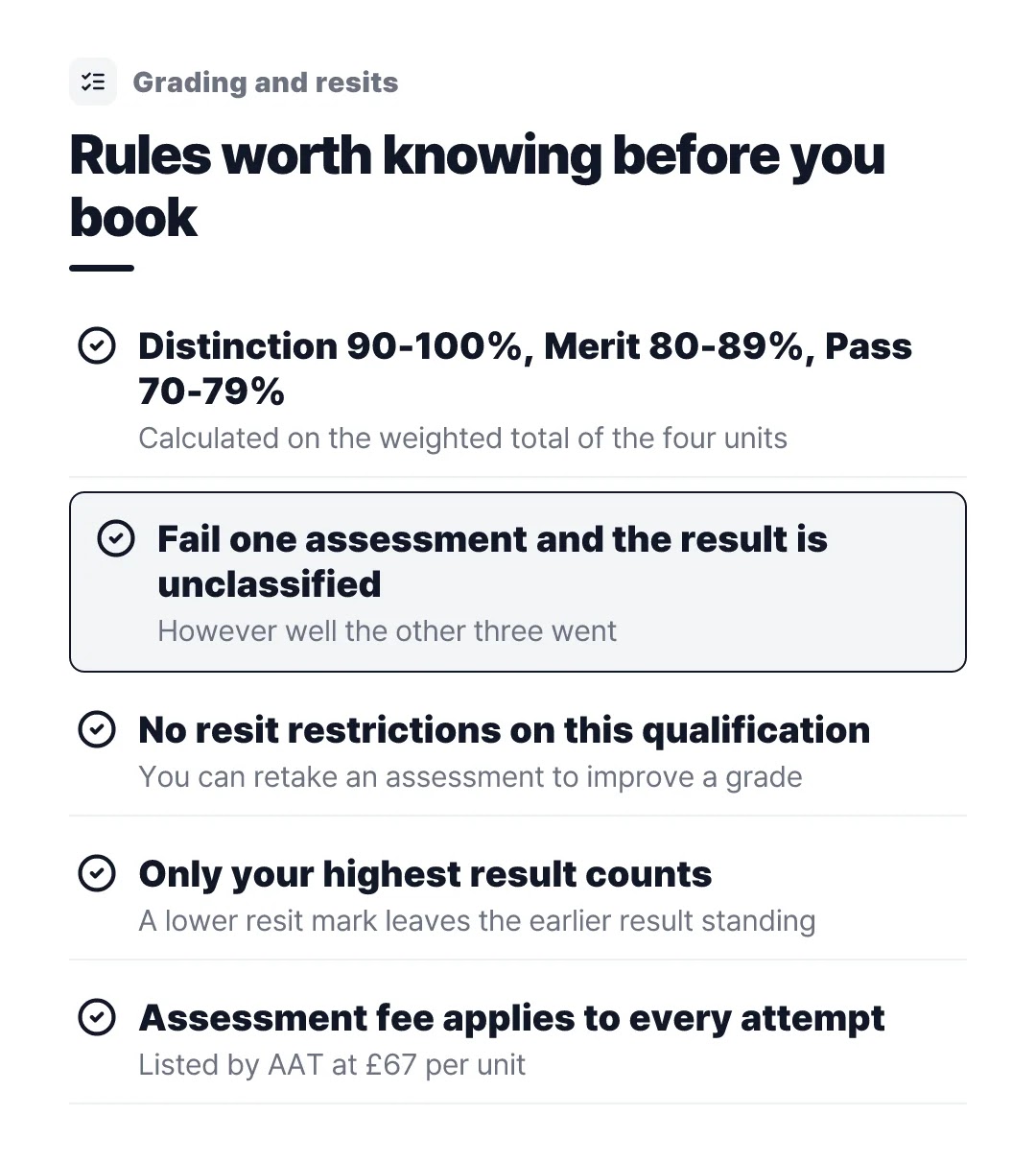
AAT lists student registration at £244, or £101 for existing AAT bookkeeping members, with assessment fees of £67 per unit — £268 across the four. Training provider fees sit separately, quoted in the range of £900 to £2,000.
The resit position is more generous than most candidates assume. The qualification is not subject to resit restrictions, and where you retake an assessment only your highest result counts towards the grade. If a resit comes back lower than your original mark, the earlier higher result stands. That makes a resit a one-way bet on grade, though each attempt carries its own fee.
Grades are awarded on the weighted total: Distinction at 90–100%, Merit at 80–89%, Pass at 70–79%, and unclassified below 70% or where any single assessment has not been passed. Because FAPS carries 40%, a strong FAPS mark moves the overall figure roughly two and a half times as far as the same mark in Business Awareness.
How the 104 pages are weighted
These notes are built around the four mandatory units and concentrate on assessed content rather than reproducing the specification in full — the same weighting logic as the table above, applied to the page count. They assume you have worked through the material once and want the recall layer.
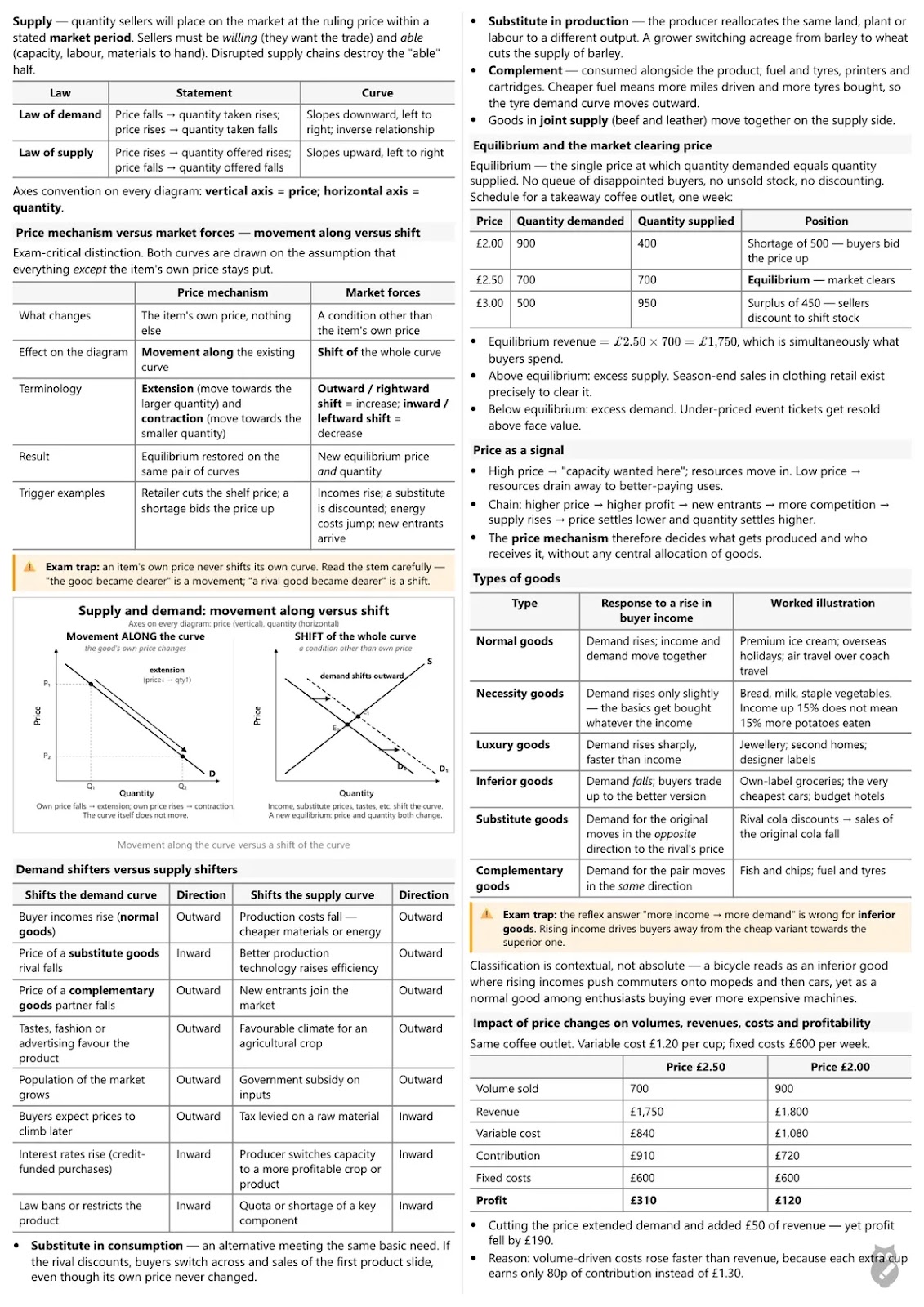
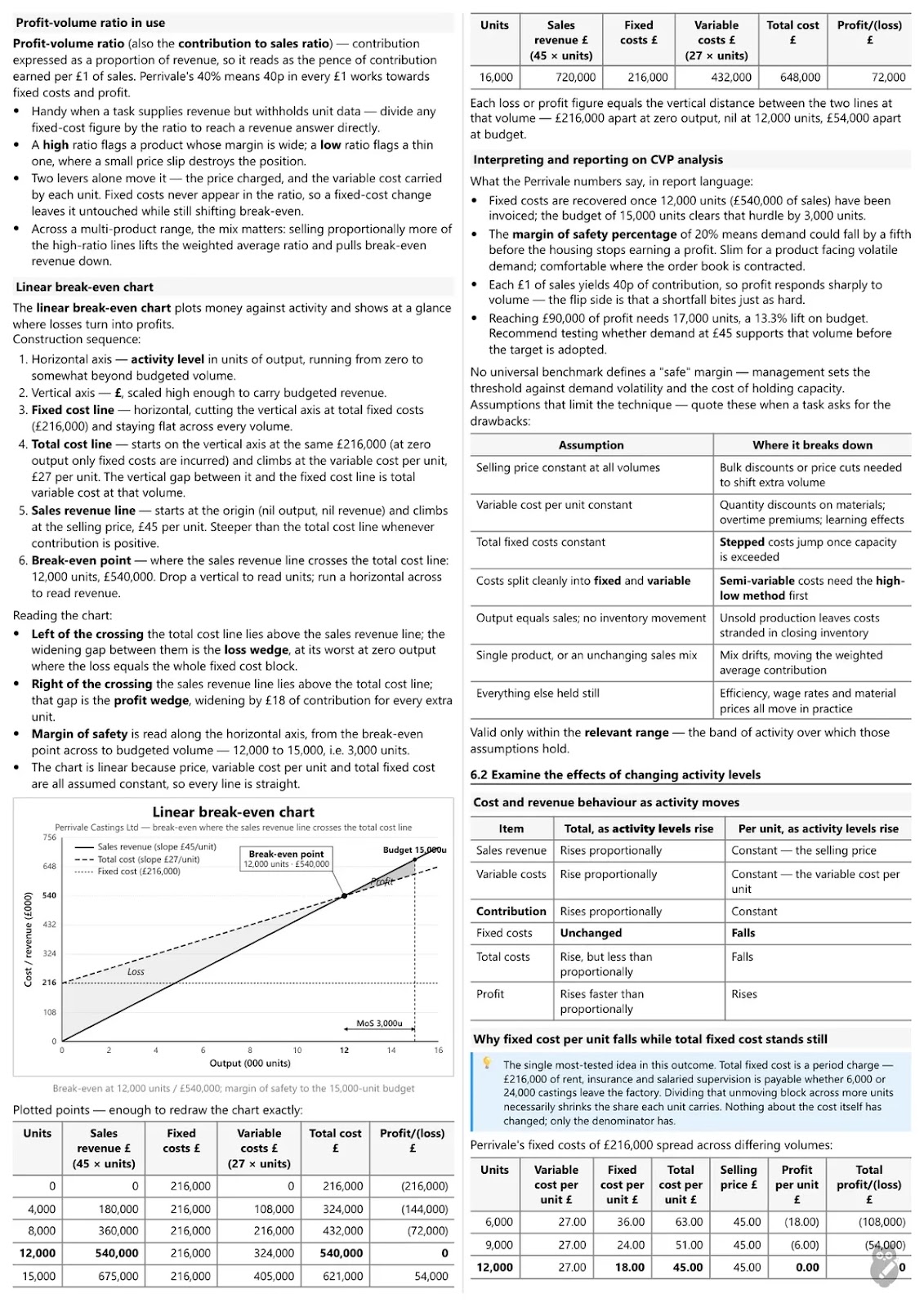
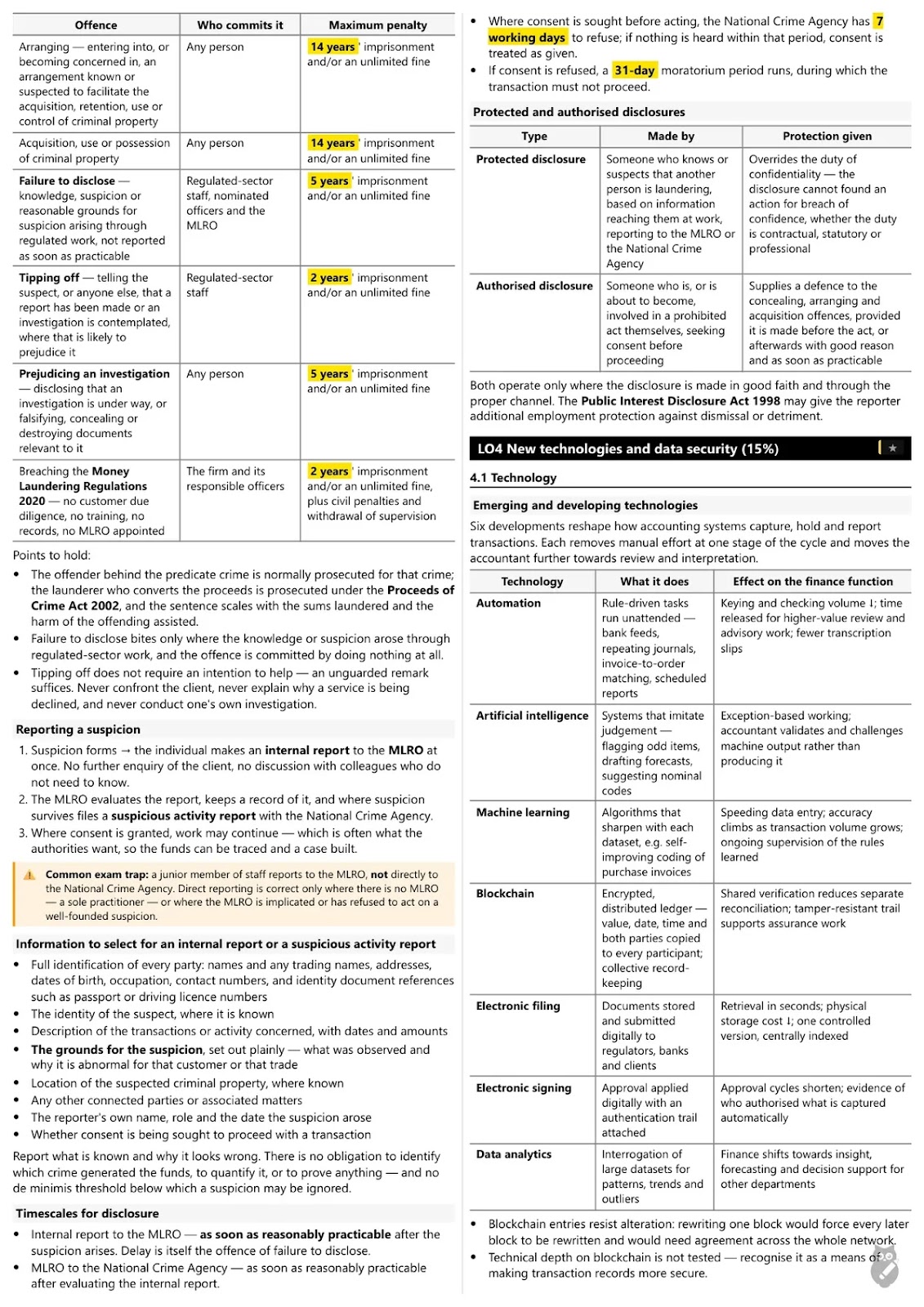
The public preview shows the approach. Business Awareness covers supply and demand with the movement-along versus shift-of distinction set out as a comparison table, and an exam trap flagged where an item's own price is mistaken for a curve shift. The management accounting pages run the high-low method through a worked example, including the harder variant where a stepped fixed cost has to be stripped out before dividing, then the linear break-even chart with margin of safety read off the axis. The money laundering section tabulates offences against maximum penalties and separates the internal report to the MLRO from the suspicious activity report to the National Crime Agency, which is the distinction that trips people in BUAW. Learning outcomes are labelled with their published weightings, so a section headed at 15% tells you what it is worth.
👉 AAT Level 3 revision notes — PDF (104 pages)
https://www.swotnote.com/library/aat-study-notes-level-3

Common questions
Is there a synoptic assessment at Level 3?
No. Under Q2022 the Level 3 Diploma in Accounting is assessed by four separate unit assessments, and the only accounting qualification that retains a synoptic is the Level 2 Certificate in Accounting. Each Level 3 unit stands alone.
Which unit should I sit first?
There is no prescribed order, but the weighting argues for tackling FAPS early rather than saving it. It carries 40% of the grade on 150 guided learning hours, so it is both the largest block and the one where extra marks move your overall percentage furthest.
Does a failed resit damage my grade?
No. AAT applies no resit restrictions and counts only your highest result for each assessment, so a lower mark on a retake leaves the earlier result standing. You do pay the assessment fee again for each attempt.
Where to put your first fifty hours
Level 3 under Q2022 is four unit assessments with a 70% pass mark on each and no synoptic. FAPS and MATS between them decide 70% of the grade, and FAPS returns the most grade per guided hour of any unit. TPFB is the one piece of the qualification that changes annually, so confirm the Finance Act behind your sitting before you revise it.
Start with FAPS, and book TPFB once you know which Finance Act version your assessment window falls under.
📄 The four Level 3 units, ordered by what they are worth
https://www.swotnote.com/library/aat-study-notes-level-3
Swotnote is an independent publisher. These are unofficial revision notes and are not affiliated with, endorsed by, or approved by AAT. Fees, assessment rules and Finance Act versions are set by AAT and change — confirm the current position at aat.org.uk before you register or book.